Our
Report - We
arrived just as it was getting dark. As we were going in
to the site Bren saw a man running across what is now the
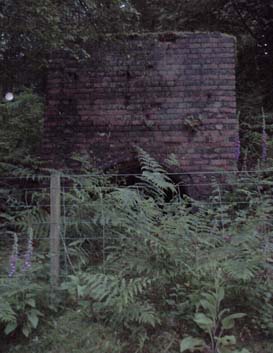
roadway towards a building. She said the building had a
tall square chimney and the man had navvie type clothing
and a cap. (She had not visited this site before and did
not know what it was). After a walk around the site we found
one place that we felt would be good to start at (large
foundations of one of the old buildings). We saw some kind
of flashing light behind this building which we couldn't
explain as there didn't seem to be anything to cause it.
No cars, no houses. We took a few pictures but didn't get
anything out of the norm. Very interesting place, may go
back in daylight to explore the area more fully.
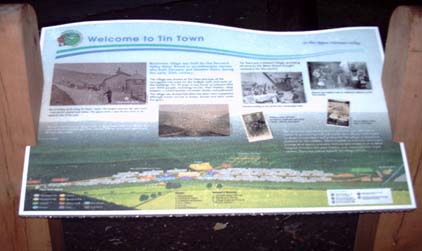
Amongst
the trees survive the shadows of a remarkable early 20th
century village which was home to over 2,500 people and
that the road they are on was once a bustling high street.
On first glance these traces are difficult to discern and
easily overlooked, the trees effectively camouflaging the
subtle and even not so subtle structures. Some of these,
such as the huge earthen terraces which were created as
level foundations for the whole of the settlement, are so
big that they are often assumed to be part of the 'natural'
surrounding landscape. Smaller remains - the shallow depressions,
concrete floors and brick fireplace foundations which represent
the traces of buildings - are difficult to see because they
are easily masked by vegetation. Even the two main streets
are hidden under the present metalled valley road and a
dirt forestry track.
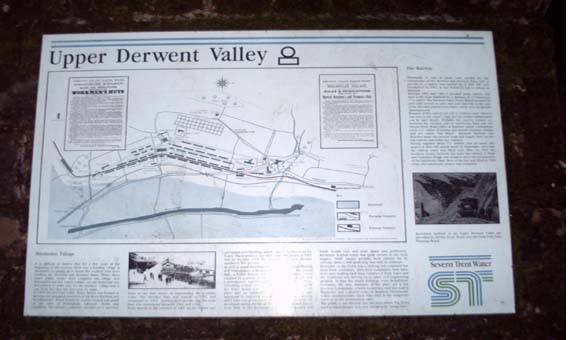
Through systematic survey of these remains the Peak District
National Park Authority has rediscovered the site, the ghost
town of Birchinlee, which was home to the navvies who built
those dams between 1901 and 1914. What is remarkable is
that so much survives of a village comprising corrugated
iron and weatherboard buildings which was only occupied
for 14 years.
How effectively hidden yet well-preserved the site was
is highlighted two 'finds' during the survey. When dirt
of the forestry track was removed the well-preserved gritstone
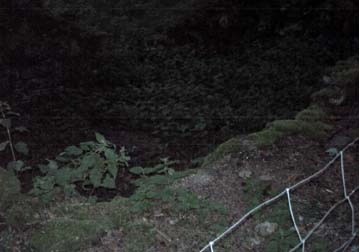
cobbled street was exposed underneath. Similarly when rhododendron
bushes standing next to the road were cut back, a 3m-deep
stone-lined hollow with a doorway was rediscovered which
turned out to be the beer cellar of Derwent Canteen. Even
the forestry manager responsible for the site for the past
40 years knew nothing of each site. |